How to Write Numbers in Words: A Complete Guide
Writing numbers in words is a useful skill for students, teachers, writers, office workers, and anyone who deals with formal documents. Although writing a small number such as 25 as “twenty-five” is easy, larger numbers can become confusing because of commas, place values, and number groups.
Knowing the basic rules makes the process much easier. In this guide, we will explain how to write numbers in words, how place values work, when to use hyphens, and how to handle large numbers and decimals.
Why Write Numbers in Words?
Numbers are often written in words in formal writing to make their meaning clear. You may see this style on checks, legal documents, contracts, school assignments, invoices, and official forms.
For example:
- 7 → seven
- 18 → eighteen
- 45 → forty-five
- 100 → one hundred
- 1,000 → one thousand
Writing a number in words can also prevent confusion or mistakes when a document contains important financial or legal information.
Understanding Place Value
The easiest way to write larger numbers correctly is to understand place value. Numbers are grouped into sets of three digits, starting from the right.
For example:
5,672,341
This can be divided into:
5 | 672 | 341
The groups represent:
- 5 million
- 672 thousand
- 341
So the number is written as:
Five million six hundred seventy-two thousand three hundred forty-one.
Depending on the style of English being used, “and” may also appear in some number names, particularly in British English. For example, 341 may be written as “three hundred and forty-one.”
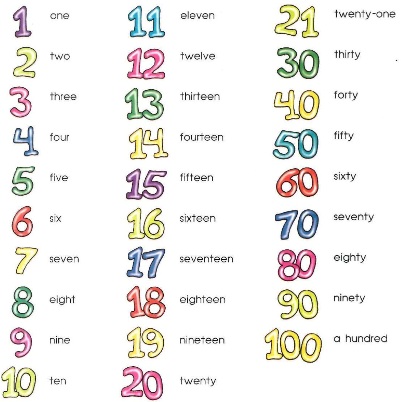
Numbers From 1 to 20
The numbers from one to twenty are mostly written as individual words, so they are worth learning first.
1 – one
2 – two
3 – three
4 – four
5 – five
6 – six
7 – seven
8 – eight
9 – nine
10 – ten
11 – eleven
12 – twelve
13 – thirteen
14 – fourteen
15 – fifteen
16 – sixteen
17 – seventeen
18 – eighteen
19 – nineteen
20 – twenty
These basic number names are used to build larger numbers.
Writing Numbers From 21 to 99
Numbers between 21 and 99 that are not multiples of ten usually contain two parts.
For example:
- 21 → twenty-one
- 34 → thirty-four
- 56 → fifty-six
- 78 → seventy-eight
- 99 → ninety-nine
A hyphen is normally used between the tens and ones when writing these numbers as words.
The main tens are:
- 20 – twenty
- 30 – thirty
- 40 – forty
- 50 – fifty
- 60 – sixty
- 70 – seventy
- 80 – eighty
- 90 – ninety
Be careful with spellings such as forty, not “fourty.”
How to Write Hundreds
For numbers from 100 to 999, start with the digit in the hundreds place and then write the remaining number.
Examples:
- 100 → one hundred
- 200 → two hundred
- 315 → three hundred fifteen
- 482 → four hundred eighty-two
- 907 → nine hundred seven
The word “hundred” does not become plural when describing a specific number. Therefore, five hundred is correct, not “five hundreds.”
In some varieties of English, “and” is used after the hundreds:
482 → four hundred and eighty-two
Both styles can be encountered, so consistency is important.
Writing Thousands and Larger Numbers
The same place-value method works for thousands, millions, billions, and beyond.
For example:
4,250
becomes:
four thousand two hundred fifty
Similarly:
72,600
becomes:
seventy-two thousand six hundred
For a larger number:
3,450,210
becomes:
three million four hundred fifty thousand two hundred ten
The key is to separate the number into groups of three digits before converting each group.
How to Write Millions and Billions
Large numbers become easier when you recognize their main groups.
- 1,000,000 → one million
- 10,000,000 → ten million
- 100,000,000 → one hundred million
- 1,000,000,000 → one billion
- 5,000,000,000 → five billion
For example:
25,400,000
is:
twenty-five million four hundred thousand
And:
6,125,300,000
is:
six billion one hundred twenty-five million three hundred thousand
How to Write Decimal Numbers in Words
Decimal numbers require a slightly different approach. The whole number is written normally, while the digits after the decimal point can be read individually.
For example:
12.45
can be read as:
twelve point four five
Similarly:
7.08
can be written as:
seven point zero eight
For technical, mathematical, or financial documents, the exact style may depend on the purpose of the number.
How to Write Money Amounts
Money is another common situation where numbers are written in words.
For example:
$125
can be written as:
one hundred twenty-five dollars
For a formal financial document, the amount may be written in a more specific format, such as including cents.
For example:
$125.50
can be expressed as:
one hundred twenty-five dollars and fifty cents
The exact format may vary depending on the document and currency.
Use a Number to Words Converter
Manually converting large numbers can take time, especially when the number contains many digits. A Number to Words Converter can quickly turn numerical values into written words.
This can be helpful when preparing invoices, documents, educational material, financial information, or other content where accuracy matters.
Even when using a converter, it is a good idea to check the result, particularly when the number will be used in an official or financial document.
Common Mistakes to Avoid
There are a few mistakes that frequently occur when writing numbers in words.
First, remember that forty is spelled without a “u.” Second, use hyphens for numbers such as twenty-one and sixty-five. Third, do not add an “s” to hundred, thousand, million, or billion when a specific number comes before them.
For example:
Correct: five hundred
Incorrect: five hundreds
Also pay attention to commas and place values when working with large numbers.
Final Thoughts
Learning to write numbers in words becomes much easier once you understand place value and the basic number names. Start with numbers from one to twenty, learn the tens, and then use those patterns to build hundreds, thousands, millions, and larger numbers.
For occasional conversions, doing the calculation manually is useful practice. When you need to convert a long or complicated number quickly, an online tool can save time and help reduce spelling or place-value mistakes.
For more calculators, converters, and useful online tools, explore NexCalco.